France gets the credit for crepes, and France earned it, but thin pancakes folded around fillings show up in a long list of food cultures, each with its own batter, filling logic, and occasion. A cafe in Matthews that says it makes crepes from around the world is drawing on that whole map. Knowing the main styles makes the menu make more sense.
The styles differ in three ways that matter: the flour, the thickness, and whether the filling runs sweet or savory. Once you can spot those, you can read almost any thin-pancake tradition at a glance.
The numbers behind the traditions
La Chandeleur, February 2, is the French holiday where crepes are the whole point, eaten at home and flipped with a coin in one hand for luck, according to tradition. It is a good reminder that in France the crepe is everyday food, not a special-occasion performance. Street stands in Paris sell them folded in paper all day, which is the energy a good cafe visit borrows. Crepe stands and home kitchens across France still treat the day as a reason to make a full batch and eat them standing around the stove together, which is about as far from fussy restaurant food as cooking gets.
France: sweet wheat and savory buckwheat
The two French branches are the ones most menus are built on. Sweet crepes use wheat flour batter and carry sugar, fruit, chocolate, chestnut cream, or a squeeze of lemon. Savory galettes use buckwheat flour, which gives a darker, earthier, slightly crisp-edged crepe, and carry egg, ham, cheese, mushrooms, or spinach. Buckwheat is naturally gluten-free, a fact that mattered in Brittany long before it mattered on modern menus.
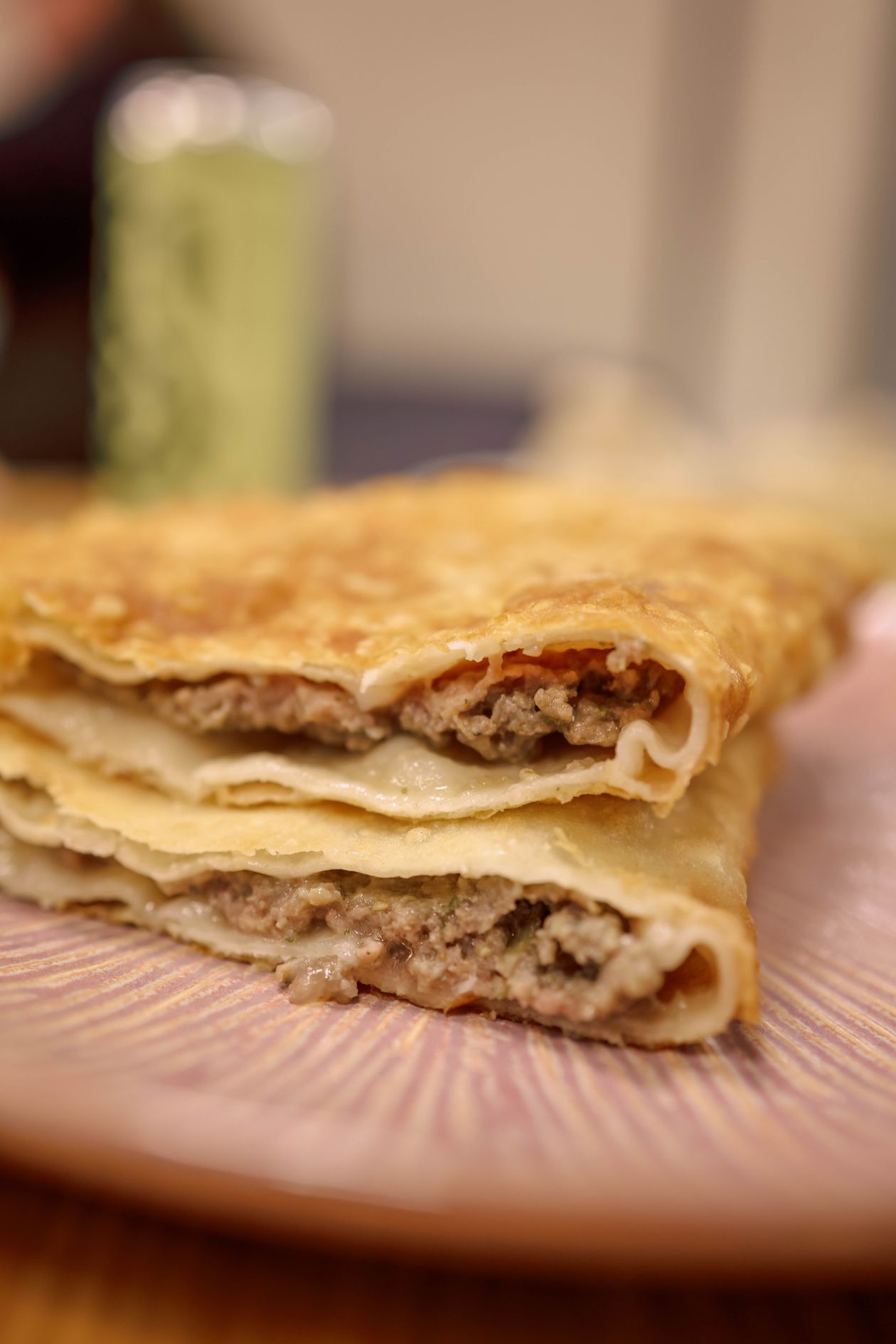
The famous preparations are worth knowing by name. Suzette is a sweet crepe served with an orange butter sauce. A complete galette, the classique, carries egg, ham, and cheese with the yolk left visible in the center of the square fold.
Russia, Japan, and everywhere the idea traveled
Russian blini are the close cousins: thin pancakes, traditionally made with buckwheat too, served with savory toppings like sour cream and fish or sweet ones like jam and condensed milk. They were celebration food, eaten in quantity before Lent. Japanese street crepes go the other direction entirely, rolled into a cone and filled with whipped cream, fruit, and cake, designed to be eaten walking. Italian crespelle are baked, often rolled around ricotta and spinach and finished in the oven like a pasta dish.
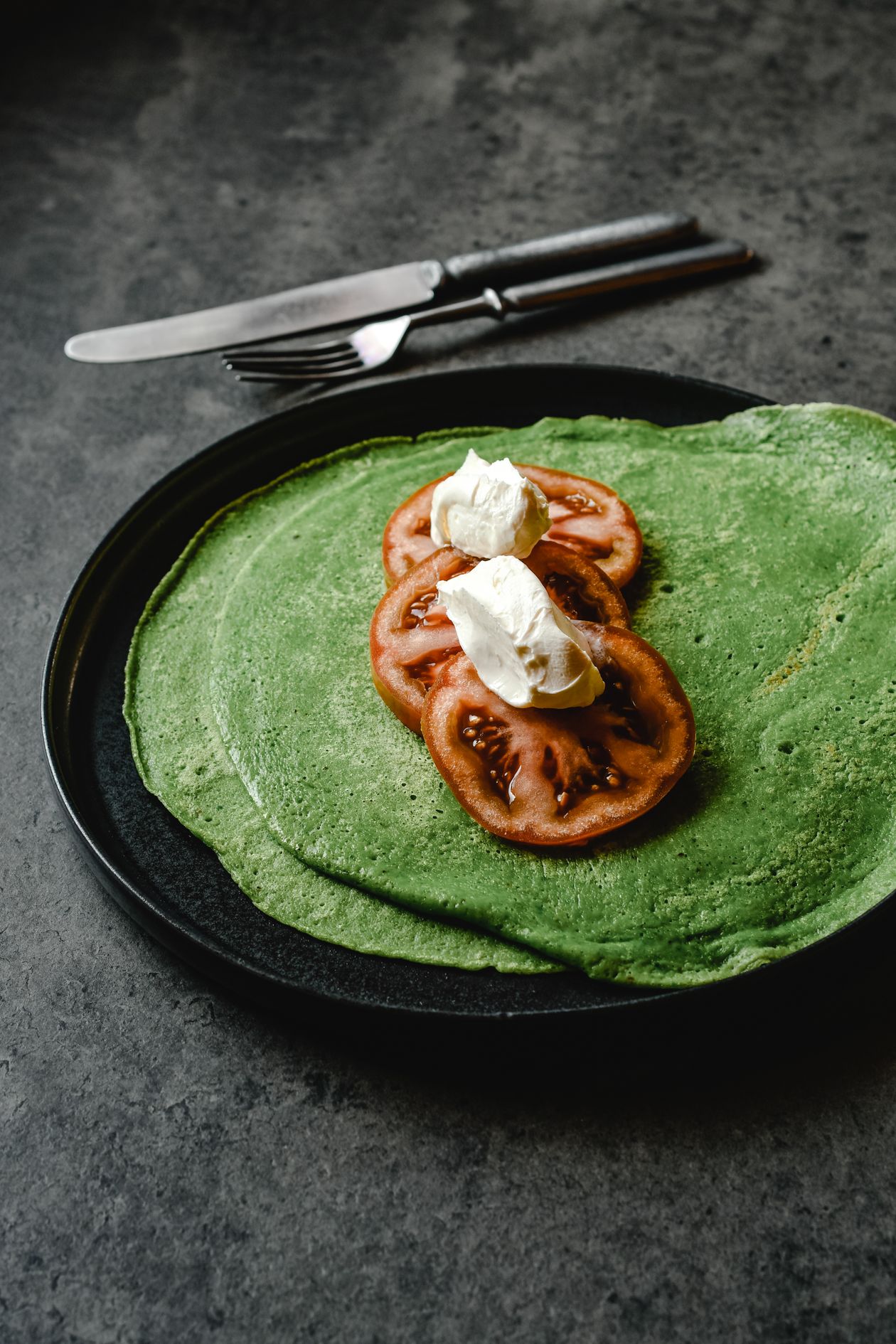
What unites all of them is economy. A thin batter stretches a little flour, egg, and milk across a whole meal, and the filling can be whatever a kitchen has. That is why every culture that got hold of the idea kept it. When you order at Royal Cafe & Creperie, you are ordering from that whole family tree, not just one French recipe.
How to use this map at the counter
The practical payoff of knowing the styles is confidence at any creperie counter, in Matthews or anywhere else. When a menu lists a buckwheat option, expect an earthier, heartier crepe that suits egg and cheese. When a special is described as Suzette-style, expect orange and butter and a dessert register. When a filling sounds like it belongs in a sandwich, the crepe is being used the galette way, as a wrapper for lunch. Each name is a small set of instructions about what will arrive.
It is also fair game to ask a cafe which tradition a menu item follows. Creperie staff tend to enjoy the question, because the styles are a point of pride in this corner of cooking. And if a cafe makes crepes from around the world, as Royal Cafe and Creperie describes its own specialty, asking which item comes from where is the fastest way to find the most interesting order on the board.
Common questions
What is the difference between a crepe and a galette?
In Brittany, a galette is a savory buckwheat crepe and a crepe is the sweet wheat version. Elsewhere the words are often used loosely.
Are buckwheat crepes gluten-free?
Buckwheat is a seed unrelated to wheat and naturally gluten-free, though shared griddles and kitchens mean anyone with celiac disease should ask first.
What are blini?
Blini are thin Russian pancakes, traditionally buckwheat, served with savory toppings like sour cream or sweet ones like jam.
Photos in this guide are representative stock images.
← All guides from Royal Cafe & Creperie← Back to Royal Cafe & Creperie