People in Matthews sometimes describe a crepe as a fancy pancake, and the description is close enough to cause confusion. They share ancestors and most of the same ingredients: flour, eggs, milk, a little butter and salt. But a crepe is not a thin pancake in the way a crepe maker thinks about it, and the differences explain everything about how it cooks, folds, and eats.
Three things separate them. The batter carries no leavening at all, the batter rests before it cooks, and it is spread so thin on the griddle that it sets in about a minute. Get those three right and you have a crepe. Miss any one of them and you have an unusual pancake.
No baking powder, no rise
Pancake batter includes baking powder or baking soda, which makes bubbles and lifts the cake into a fluffy disc. Crepe batter leaves leavening out entirely, and it usually carries proportionally more egg and milk. The result is a batter closer to a thin custard than a cake mix. It pours like cream, which is what lets it spread across a wide griddle in a layer you can almost see through.
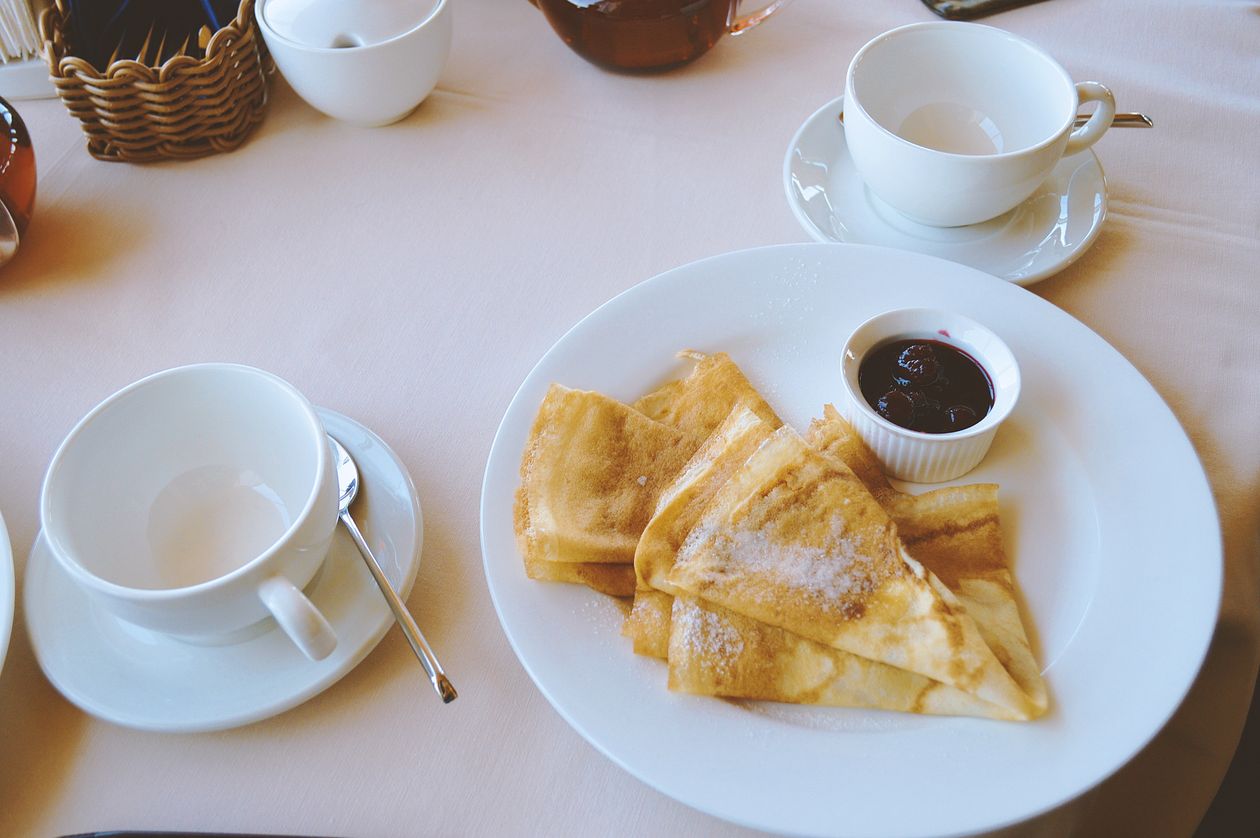
Because there is no rise to hide behind, there is nothing to make a crepe spongy. The texture people like, tender with slightly crisp lacy edges, comes from the batter itself and the heat, not from anything puffing it up.
The rest is not optional
- Mix. Flour, eggs, milk, melted butter, and a pinch of salt are whisked just until the batter is smooth and pourable.
- Rest. The batter sits for at least half an hour, and often longer, so the flour fully hydrates and the bubbles from whisking settle out.
- Heat. A wide, flat griddle or crepe pan heats until a drop of water skitters across the surface.
- Swirl. A small ladle of batter goes in the center and is spread thin with a swirl of the wrist or a flat spreader.
- Flip. Once the edges look dry and lacy, the crepe is loosened and flipped for a brief finish on the second side.
- Fill and fold. Filling goes on while the crepe is still warm, then it is folded or rolled and served right away.
The resting step is the one home cooks skip and professionals never do. Freshly mixed batter has air beaten into it and flour that has not absorbed the liquid yet. Cooked right away, it tears, bubbles unevenly, and cooks up tough. Rested batter spreads in one smooth sheet and comes off the griddle tender. Most of what separates a good crepe shop from an average one is patience with a bowl of batter.
Why the fold works
A pancake folded in half would crack. A crepe folds because it is thin, moist, and slightly elastic from the eggs. That foldability is the point of the whole form: the crepe is a wrapper. In Brittany, where the savory version comes from, buckwheat crepes called galettes are folded into a square around an egg with the yolk showing in the middle. Sweet wheat crepes get the triangle or roll treatment. Same batter logic, two traditions.
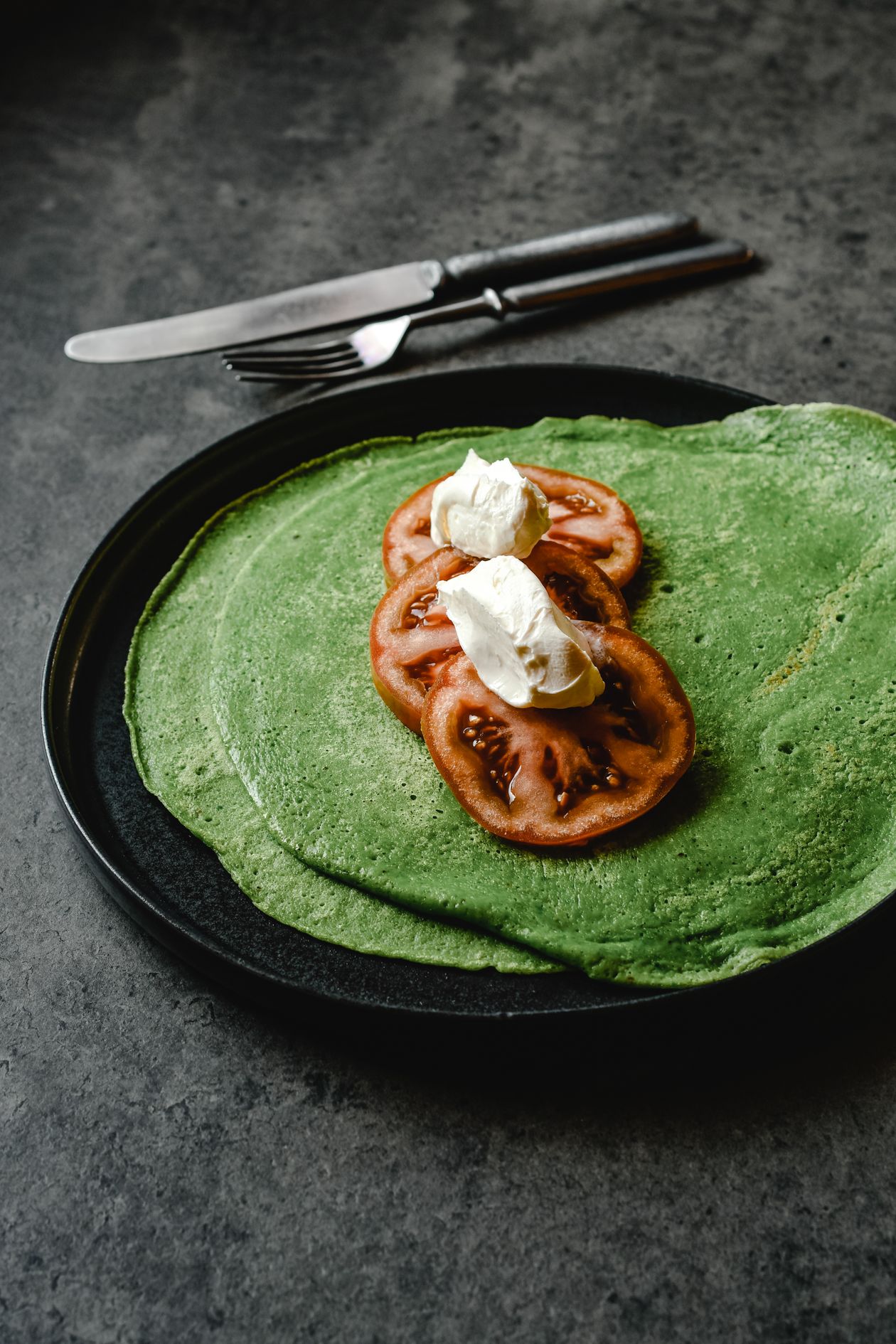
At Royal Cafe & Creperie in Matthews, that wrapper carries everything from breakfast eggs to banana and chocolate, which is only possible because the base stays neutral. Once you understand that the crepe is a vehicle, the menu stops being a list of desserts and starts being a list of meals.
Thickness is a dial, not a rule
Not every thin pancake tradition aims for the same thickness. French crepes are the thinnest of the family, spread almost to transparency at the edges. Russian blini run slightly thicker. Scandinavian plattar are small and thicker still. None of these is the correct one; each thickness suits its fillings. A crepe that has to wrap a juicy filling needs to be supple more than it needs to be thin, and a crepe eaten plain with sugar can be as thin as the griddle allows.
Home cooks chasing the cafe result usually fail on temperature before they fail on batter. A griddle that is too cool makes a pale, rubbery crepe that steams instead of setting. A griddle that is too hot scorches spots before the batter finishes spreading. The working window is the one where the batter sets on contact but does not color for the first half minute. Cafes hold that temperature all day on heavy iron, which is the unglamorous reason their crepes are hard to copy in a thin home pan.
Common questions
Is crepe batter the same as pancake batter?
No. Crepe batter has no leavening, more egg and milk relative to flour, and it rests before cooking so it spreads thin and stays tender.
Why do crepes not tear when folded?
The egg-rich, unleavened batter cooks into a thin, flexible sheet. A leavened pancake is thicker and spongier, so it cracks instead of folding.
What is a galette?
A galette is the savory buckwheat crepe from Brittany, France, usually folded into a square around fillings like egg, ham, and cheese.
Photos in this guide are representative stock images.
← All guides from Royal Cafe & Creperie← Back to Royal Cafe & Creperie