A cafe menu board in Matthews can list twenty drinks that are all, underneath, espresso and milk. The names are Italian, the sizes are inconsistent from shop to shop, and the flavored options multiply every season. None of it is hard once you know that nearly every drink is a ratio. Change the proportion of espresso, steamed milk, and foam, and you change the drink.
This is the plain version: what each common drink actually is, how strong it tastes, and how the flavored lattes that cafes like Royal Cafe & Creperie pour, lavender, pistachio, rose vanilla, and the like, fit into the picture.
The core drinks, side by side
| Drink | What is in it | How it tastes |
|---|---|---|
| Espresso | A single concentrated shot of coffee, nothing added | Intense and short; the base of everything else |
| Americano | Espresso diluted with hot water | Closest to drip coffee, but cleaner and stronger-flavored |
| Cappuccino | Equal thirds espresso, steamed milk, and foam | Light, airy, and coffee-forward for its size |
| Latte | Espresso with mostly steamed milk and a thin cap of foam | Mild and milky; the most forgiving drink for new coffee drinkers |
| Mocha | A latte with chocolate added | A latte that leans dessert; good first step away from plain coffee |
| Cold brew | Coffee steeped cold for many hours, served over ice | Smooth, low acidity, and quietly strong |
The pattern to notice: as the milk goes up, the coffee flavor goes down and the drink gets gentler. A cappuccino in a small cup can taste stronger than a large latte with the same single shot in it, because the latte spreads that shot through far more milk. If a drink tastes weak, the fix is usually an extra shot, not a different drink.
How flavored lattes work
A flavored latte is a regular latte plus a syrup or sauce worked into the espresso before the milk goes in. Lavender and rose vanilla are floral and light, better in smaller sizes where they do not get lost. Pistachio and hazelnut are nutty and hold up in larger cups. Seasonal flavors like pumpkin spice and maple follow the same rule: they sweeten the drink, so a flavored latte needs no extra sugar, and ordering one half-sweet is a legitimate and common request.
Syrup quality is the difference between a flavored latte that tastes like lavender and one that tastes like soap. Cafes that use measured syrups and fresh shots land on the right side of that line. When in doubt, order the small. Floral flavors especially are better concentrated than diluted.
Pairing coffee with food
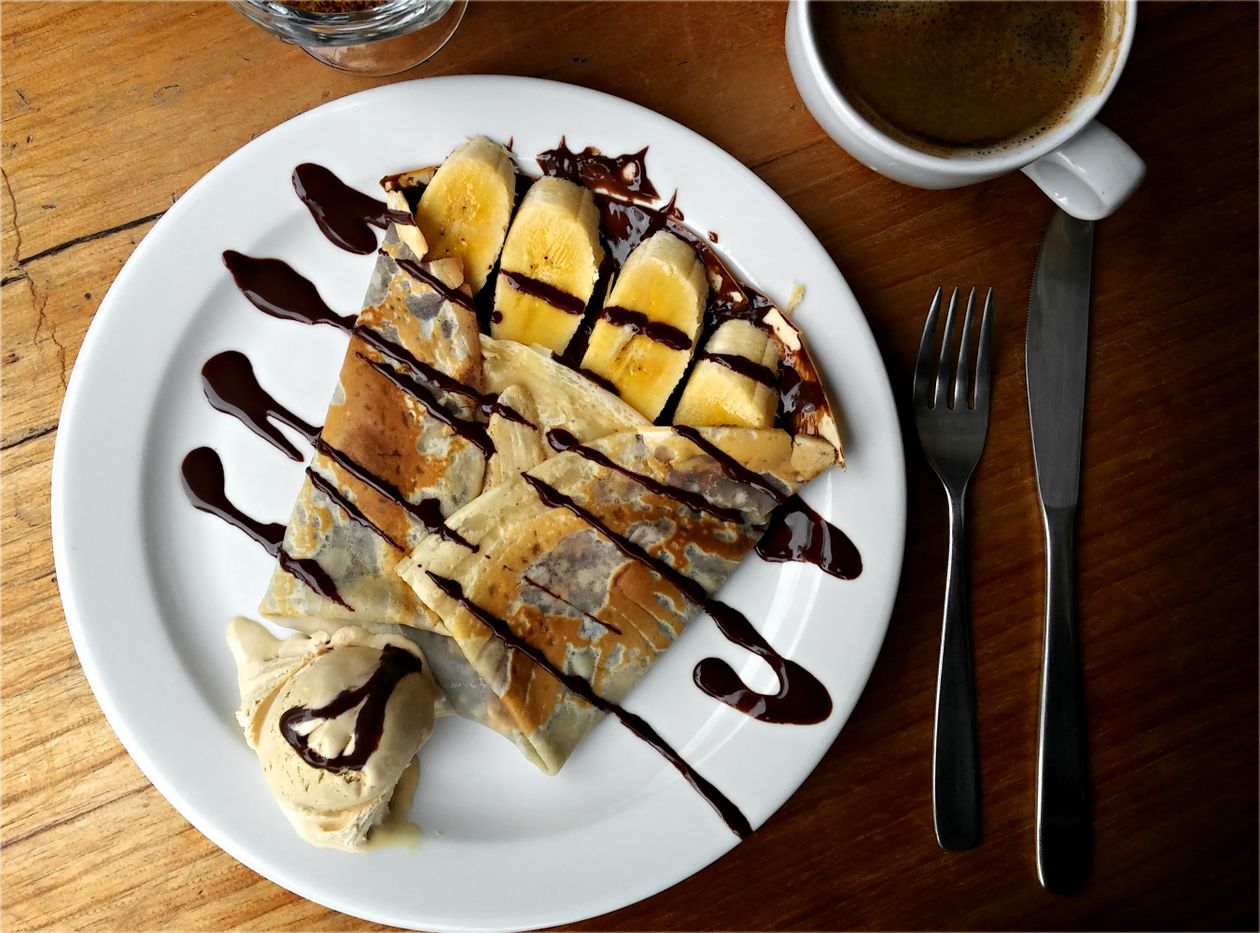
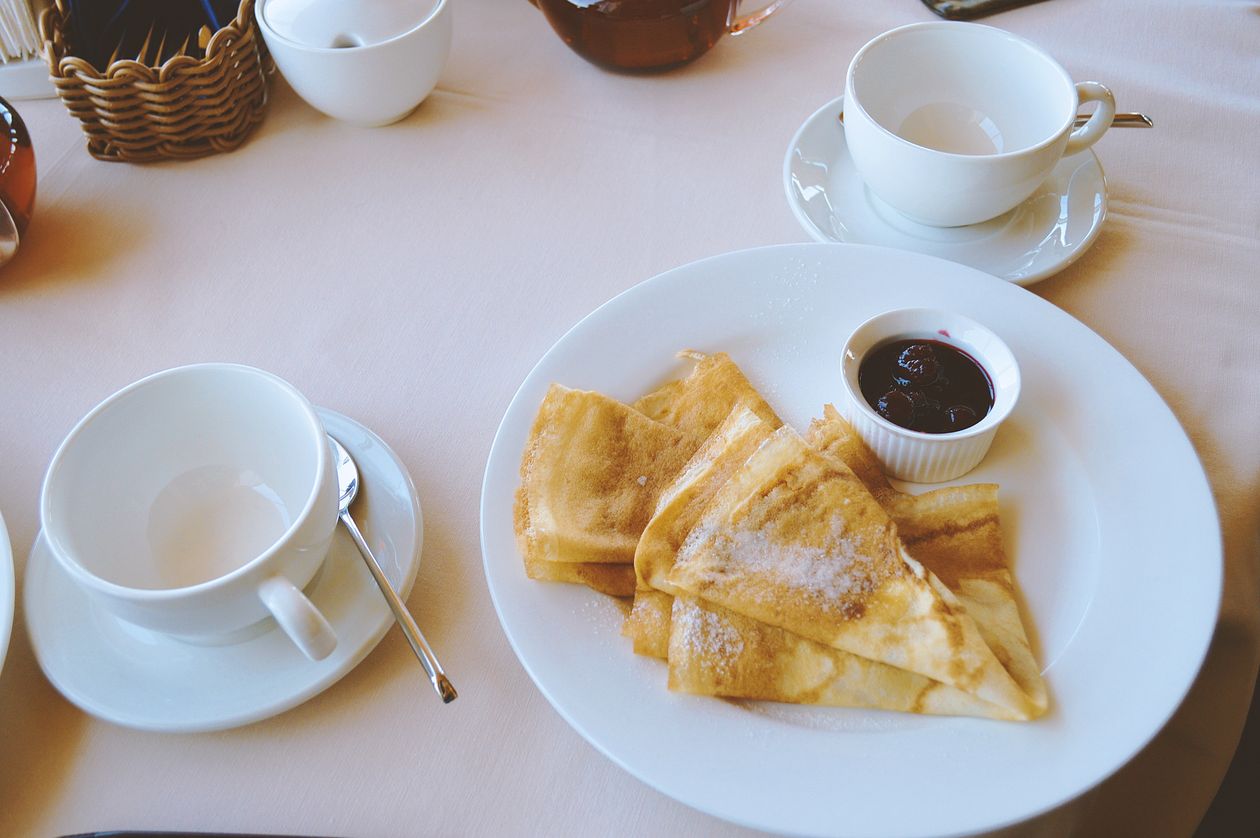
Milk drinks pair best with sweet food because the milk softens both. A latte next to a chocolate-filled crepe is a comfortable match. Black coffee, an Americano or a plain espresso, cuts through rich and buttery food, which is why it works next to a savory crepe with cheese. Tea belongs in the conversation too: a plain black or green tea resets the palate between a savory course and a sweet one, something regulars at a creperie figure out by their third visit.
One last piece of menu literacy: drink names travel badly between countries and chains, so if a board confuses you, order by description. Espresso with a lot of steamed milk and a little foam gets you a latte anywhere in the world, whatever the board calls it.
Milk, foam, and why texture matters
Steamed milk is not just hot milk. Steaming with a wand folds tiny air bubbles into the milk and changes its texture and sweetness, because heating milk makes its natural sugars taste more pronounced. A well-steamed latte milk pours like wet paint and has a light sheen. Foam is the same milk with more air worked in, which is why a cappuccino, heavy on foam, feels lighter in the hand and on the tongue than a latte of the same size.
This is also why alternative milks behave differently in the cup. Oat milk steams closest to dairy and carries espresso flavor comfortably. Almond milk is thinner and can separate in very hot drinks. Soy has its own distinct flavor that some people love with mochas. None of these is the wrong choice; they are different drinks wearing the same name, and a cafe that lists milk options on its coffee menu, as many in the Matthews area do, lets you pick the version you actually enjoy.
Common questions
What is the mildest coffee drink for a beginner?
A latte. It has the most milk relative to espresso, so the coffee flavor is present but gentle, and flavored versions are gentler still.
Is a cappuccino stronger than a latte?
It tastes stronger because it has less milk diluting the same shot of espresso, plus more foam. The caffeine in a same-size drink is often similar.
Does cold brew have more caffeine?
Usually yes per serving, because it is brewed as a concentrate and steeped for many hours. It tastes smooth, which makes the strength easy to underestimate.
Photos in this guide are representative stock images.
← All guides from Royal Cafe & Creperie← Back to Royal Cafe & Creperie